How to Get More Eyes on Your Portfolio by Working Out Loud
You’ve built your portfolio. You’ve applied for jobs. Maybe you’ve even completed a few freelance projects. But still—nothing. No interviews. No opportunities. No traction.
So what gives?
The reality is, doing great work isn’t enough anymore. Not if no one sees it. In today’s competitive job market, visibility matters just as much as skill. And that’s where the concept of working out loud comes in.
If you’re wondering how to get an instructional design job, this strategy could be the missing piece. Working out loud is a game-changer for instructional designers and eLearning developers. It’s a simple but powerful way to build credibility, showcase your instructional design skills, and attract real job opportunities—without constantly pitching yourself, endlessly applying for jobs, and screaming into the void.
What is Working Out Loud?
Working out loud means sharing your work publicly as you do it. It could be a behind-the-scenes look at how you built a Rise course, a short video explaining your Storyline development process, or even a post about a recent lesson you learned while prototyping a course.
Mel Milloway, a longtime leader in the industry and current Sr. Learning Experience Designer says:
“To me, it means taking the skills that you already have or the skills that you're trying to build, and applying them…and then sharing out.”
It’s not about being an influencer. It’s not about perfect branding. It’s about showing the work you’re already doing—so people can actually see what you’re capable of.
Why it Works (Especially for Landing Instructional Design Jobs)
Let’s break it down with a real-world scenario, featuring two aspiring instructional designers: Lauren and Holly.
Let’s start with Lauren. Lauren is an aspiring instructional designer. She spends weeks building a stunning portfolio project in Storyline—interactive, clean, and learning objective-aligned. Then she uploads it to her site…and waits…and waits.
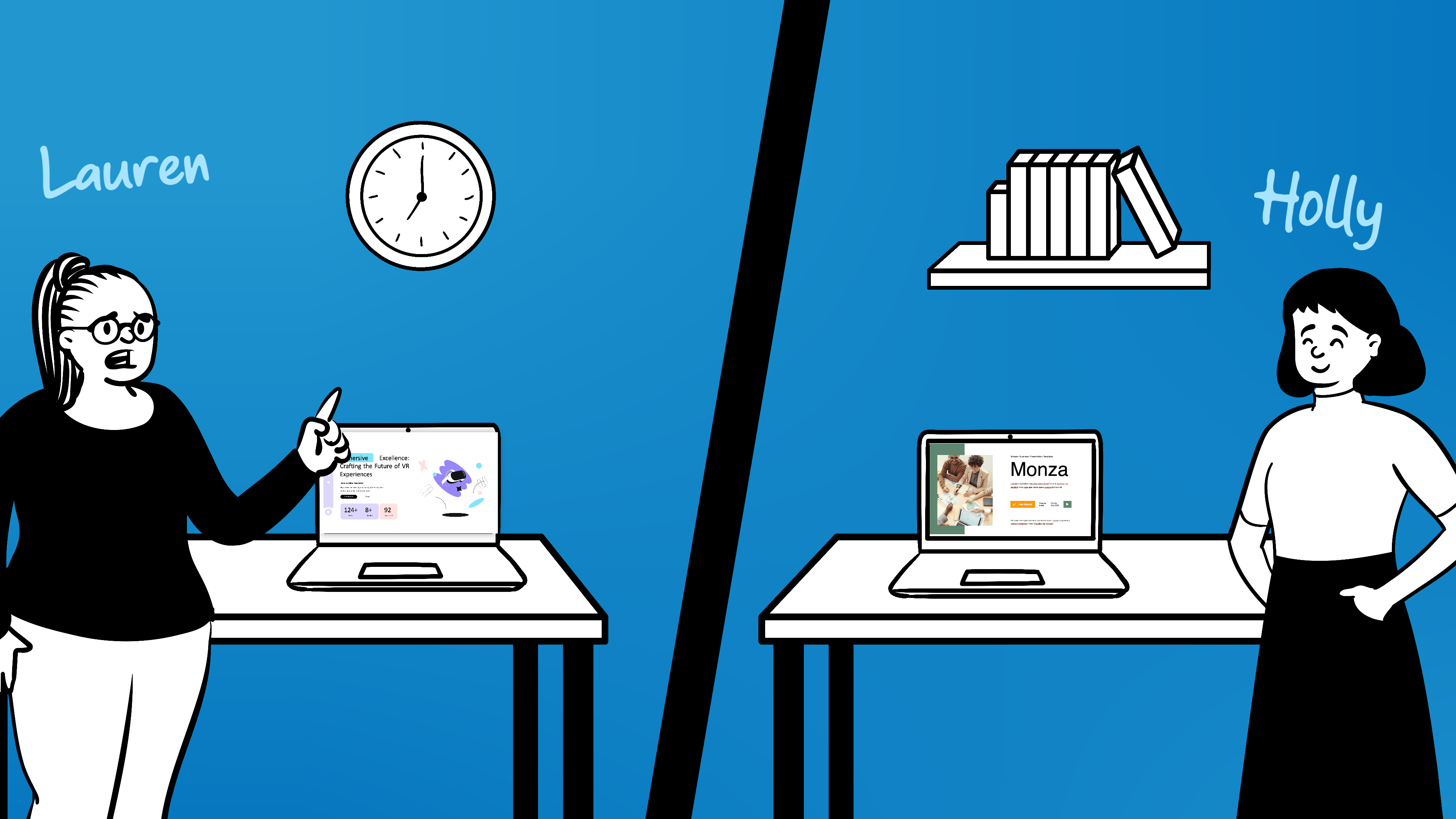
Now, meet Sarah. Sarah builds a similar project. But instead of waiting for someone to find it, she posts about it on LinkedIn:
A screenshot of her visual storyboard
A quick note about a challenge she overcame
A short video walking through her branching scenario logic
Her work shows up in feeds. Her name pops up in search. Hiring managers start paying attention.
Same level of skill. Totally different outcomes.
To put it simply: Working out loud gets eyes on your work, and that visibility builds credibility. And that leads to real opportunity.
Working out loud is also one of the most effective ways to tap into the hidden job market. When you share what you're working on, you stay top of mind. People refer you, invite you to projects, or reach out directly—often before a job ever gets posted.
This strategy is especially powerful for new instructional designers trying to land their first role. It shows initiative, creativity, and communication skills—everything hiring managers are looking for in an ID candidate.
Free Course: 10-Day Career Mindset Reset
Inside The eLearning Designer’s Academy, we think a little differently about professional development and career growth. Enroll in our free 10-Day Career Mindset Reset to start thinking differently about your skills, career, and confidence!
Real-World Results from Working Out Loud
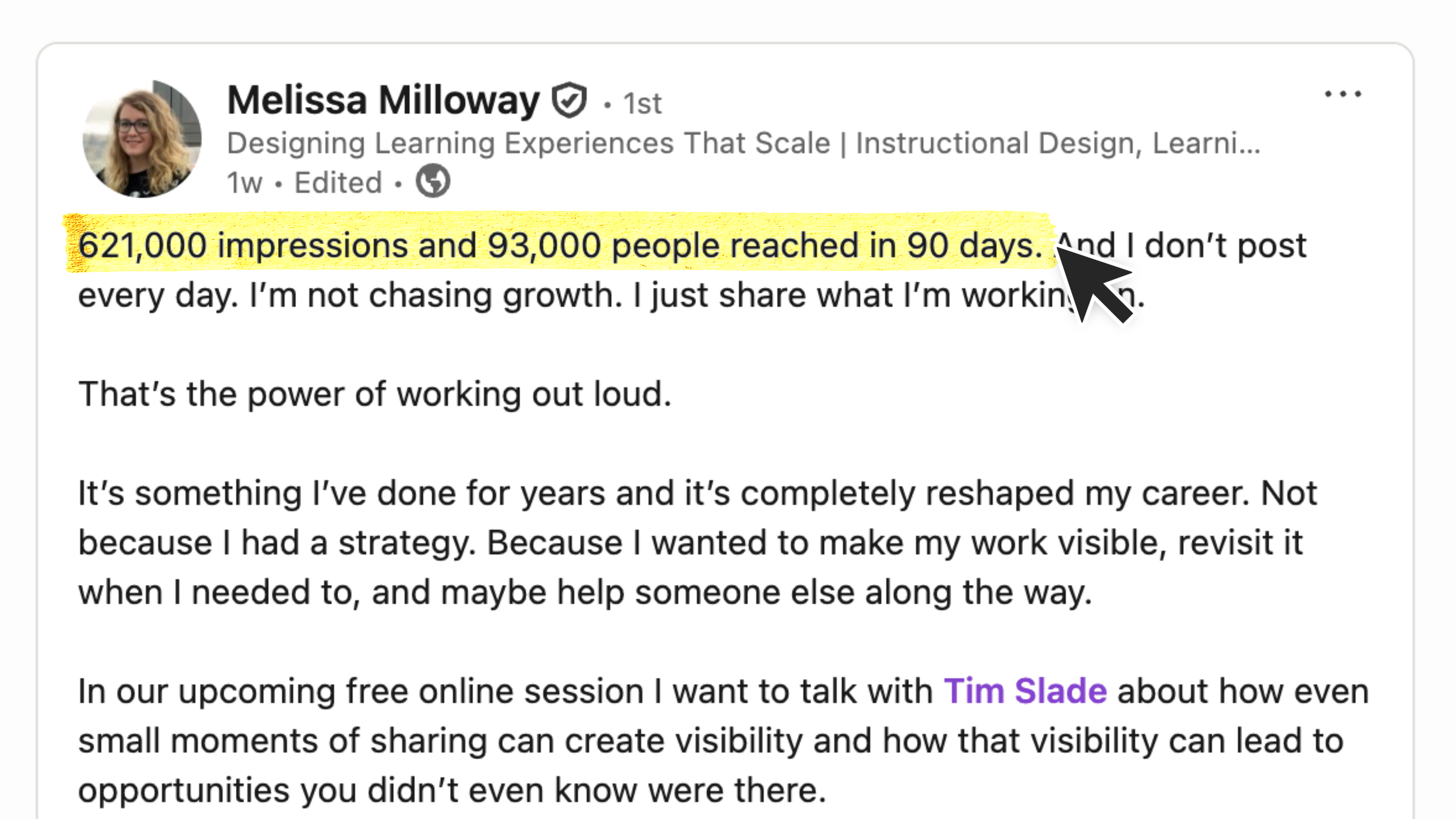
When @Mel Milloway participated in one of our eLearning challenges, she wasn’t trying to go viral. She built a simple, creative example and posted it on LinkedIn with a short caption about what she built and why.
As a result of her working out loud, it helped her reach over 600,000 impressions and nearly 100,000 people in just 90 days. No ads. No strategy. Just honest sharing.
And then there’s @Paul Ulloa, one of our students from our Hands-On Cohort & Coaching Program. Paul wanted to do video work with Camtasia. Instead of cold-pitching companies, he started posting short, helpful Camtasia tips on LinkedIn.
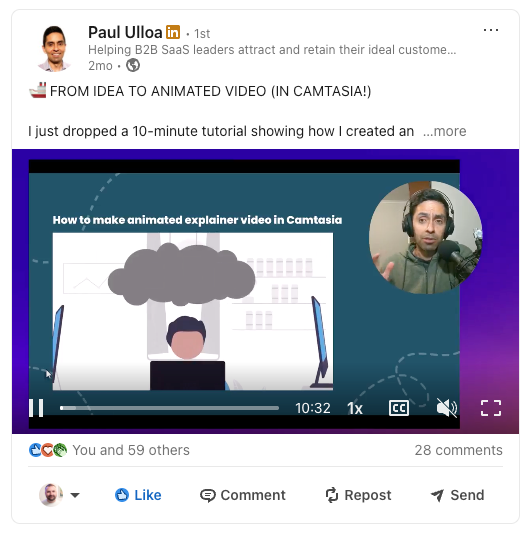
A few weeks later, Paul started getting contacted and hired by clients for his video work. That’s the power of working out loud.
Examples of Working Out Loud
Want to see what working out loud actually looks like? Check out these examples from our community:
@Julia Bouchelle shared a short video, showing how to create a simple highlight reel for your portfolio.
@Tania Shenk posted a progress update on her latest portfolio project.
@Juli Lorton shared a link to her first video created in Camtasia.
We’ll continue updating this section with great examples from our community, so you can get inspired and see the many ways people are using working out loud to stand out.
How to Start Working Out Loud (Without Feeling Cringey)
If you’re still not sure how to get started with working out loud, the good news is that you don’t need a content calendar, personal brand, or social media strategy. You just need to share what you’re doing, in whatever format feels natural.
Here are a few simple ways to start:
Share a screenshot of something you’re building in Storyline, Rise, or PowerPoint.
Record a short video explaining your thought process for a project decision.
Participate in one of our monthly eLearning challenges and make daily posts to share your progress.
Write a post about a mistake you made and what you learned from it.
Show a "before and after" from an eLearning redesign.
Reflect on something new you learned from a project or course.
Use this list of ID interview questions as prompts for practice posts. For example: Pick a question and write about how you'd answer it or how you've demonstrated that skill in a past project.
You don’t need to be loud. You just need to be visible.
What’s Next?
Want to keep learning more about building your instructional design portfolio? Check out these additional resources…
The Bottom Line
Most people don’t get hired just because they built a great portfolio. They get hired because people saw it. They got curious. They reached out. They made a connection.
If you want to land an instructional design job, working out loud is one of the smartest ways to get noticed by hiring managers and peers alike.
It helps you stop being the best-kept secret in your industry. It makes your work discoverable. It builds momentum.
So if you’ve been waiting for someone to notice your work—it’s time to stop waiting. Start sharing!